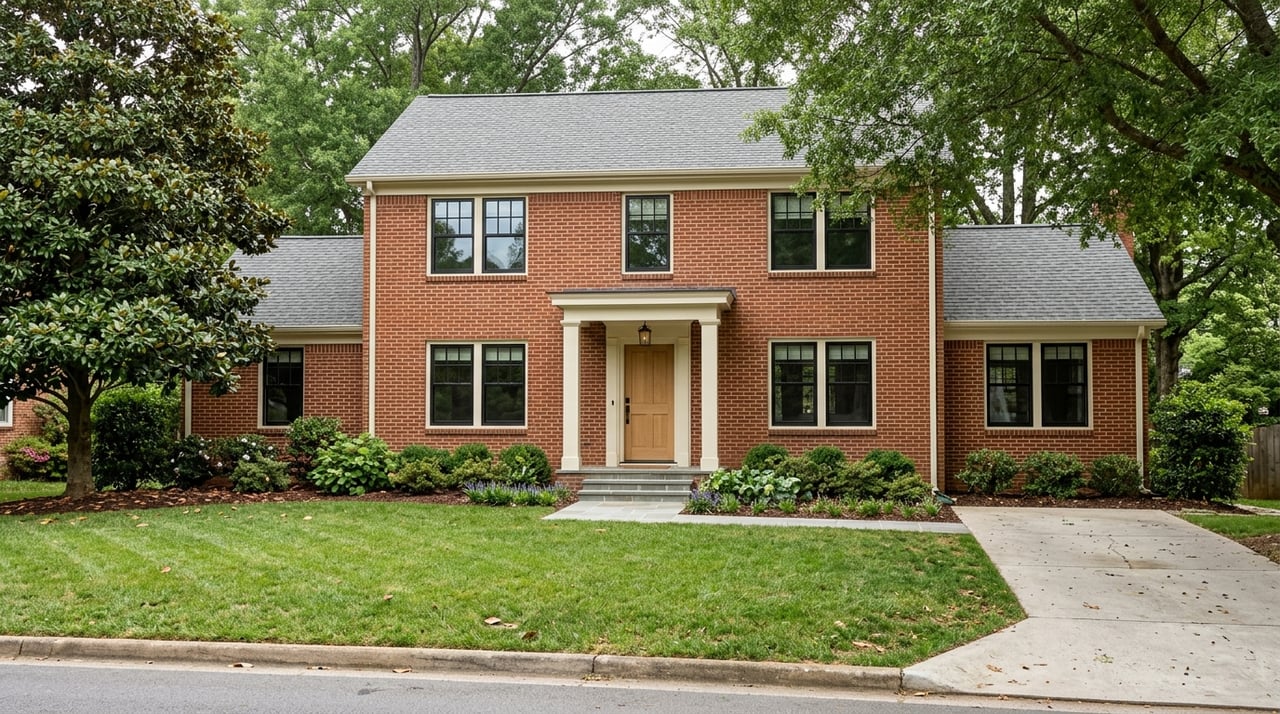
Buying in Marietta can feel like choosing between two very different lifestyles. One home may win you over with mature trees, original details, and a street with deep local history. Another may offer a more open layout, newer systems, and fewer near-term projects. If you are trying to decide which path fits you best, this guide will help you compare older and newer homes in Marietta with more clarity and confidence. Let’s dive in.
Marietta offers both old and new
Marietta is not a one-note housing market. According to the city’s 2023-2027 Consolidated Plan, 54% of the housing stock is single-family, and 42% of the housing stock was built before 1980. That mix gives you real choices, whether you are drawn to historic character or a more updated feel.
The same city data shows a 47.2% owner-occupied housing rate and a median owner-occupied home value of $448,500. In practical terms, that means you are shopping in a market where home age, condition, and location can shape value in very different ways. Looking beyond the listing photos matters here.
Older homes in Marietta
Older homes often offer more character
Older homes in Marietta can come with architectural details and layouts that feel distinct from newer construction. The city’s homeowners’ handbook identifies forms such as bungalow, Georgian cottage, English cottage, American Small House, postwar ranch, split-level, and more. These homes often reflect the period and street pattern around them.
If you enjoy homes with personality, older properties may stand out quickly during a tour. Original materials, established lots, and a stronger sense of architectural identity can all be part of the appeal. For many buyers, that character is hard to replicate.
Older layouts may feel less open
One tradeoff is floor plan style. The city’s guidance contrasts older plan types such as shotgun, central-hall, and side-hall layouts with modern open floor plans. So while an older home may have charm, it may also feel more compartmentalized.
That is not automatically a drawback. Some buyers prefer defined rooms for work, quiet, or daily routines. The key is to think honestly about how you live now, not just what looks good in photos.
Older homes can come with more upkeep
The city’s preservation guidance notes that older buildings are more susceptible to weather, even though they can remain resilient when kept dry and well maintained. It identifies water, condensation, termites, mold, and rot as major threats. The city’s housing plan also notes that maintenance needs tend to grow as housing ages.
For you as a buyer, that means the conversation should go beyond cosmetics. A beautiful older home may still need careful review of the roofline, windows, drainage, crawl space or basement conditions, and signs of deferred maintenance. Character is valuable, but so is knowing what you may need to address after closing.
Lead risk matters in pre-1978 homes
If a home was built before 1978, lead-based paint is an important question. Marietta’s housing plan says homes built before 1978 in its rehab program are tested for lead-based paint, and the city estimates 10,003 units built before 1980 are at greatest risk of containing lead-based paint. That makes age an important practical factor when comparing homes.
During your search, ask whether a pre-1978 home has been tested and whether any past renovation work may have disturbed painted surfaces. This is especially important around windows and doors, where friction can create lead dust if lead-based paint is present.
Newer homes in Marietta
Newer homes often fit modern routines
Newer homes usually appeal to buyers who want a more standardized layout and fewer immediate projects. In many cases, you are more likely to find open common areas, more integrated storage, and systems that feel closer to current expectations. That can make daily life simpler, especially if you want a lower-maintenance start.
If you are relocating, juggling a busy schedule, or simply want fewer surprises, a newer home may offer peace of mind. That does not mean no maintenance. It just often means less catch-up work in the near term.
Newer systems may improve comfort
The research points to a core strength of newer construction: homes are often built with comfort, efficiency, and durability in mind as connected systems. That can matter in ways you feel every day, from more consistent indoor temperatures to better control over air movement. Those features may support lower near-term hassle compared with an older home that has not been meaningfully updated.
When touring newer homes, look past finishes and ask about the age and condition of major systems. A home that feels move-in ready on day one may be a better fit if you value predictability and convenience.
Newer homes may appear in redevelopment areas
In Marietta, some newer homes and infill opportunities are tied to redevelopment efforts. The city’s Tax Allocation District program targets areas within walking distance of Marietta Square and supports improvements such as sidewalks, streetscape upgrades, park renovation, infrastructure construction, and demolition of blighted buildings. The Center City Perimeter TAD was created to help rebuild in-town neighborhoods and expand housing choices.
That context matters because a newer home in Marietta may still be part of an older in-town setting. You may find newer construction near long-established streets, which can give you a blend of fresh systems and a more connected location.
Historic districts can change the decision
Marietta has a strong preservation framework
Marietta has five National Register historic districts, three locally designated residential historic districts, and a Downtown Marietta Historic District. That preservation structure helps protect the character of certain areas, but it can also affect what you can change on a property exterior.
If you love the idea of living in a historic setting, this can be a plus. If you want broad flexibility for exterior updates, it is something to understand before you write an offer.
Exterior changes may need approval
The City of Marietta says a permit is required when an owner or contractor intends to construct, enlarge, alter, repair, move, or demolish a building, or install or alter electrical, gas, mechanical, or plumbing systems. In the Church Cherokee Streets district, property owners or occupants must obtain a Certificate of Appropriateness for exterior changes, including new construction, demolition, or material changes. Kennesaw Avenue properties also must obtain a COA before certain projects under the city code.
This is one of the biggest practical differences between some older homes and many newer ones. If a home sits in a historic district, your renovation ideas may involve more review than you expected. That is not a reason to rule out the home, but it is a reason to ask early.
How to compare older and newer homes
Start with your daily life
Before you compare finishes, think about how your household actually functions. Do you want separate rooms, or do you need open sight lines and a more flexible main living area? Do you enjoy home projects, or do you want the fewest possible maintenance items in your first year?
The right choice often comes down to lifestyle fit more than age alone. A well-kept older home may suit you better than a newer one with a layout you do not love. A newer home may be the smarter fit if you value simpler upkeep and more predictable systems.
Ask these questions on every tour
Use a consistent checklist so you can compare homes fairly:
- What year was the home built?
- Which major systems have been updated?
- Is the property inside a historic district or local landmark area?
- Would planned exterior changes require a Certificate of Appropriateness or building permit?
- If the home is pre-1978, has it been tested for lead?
- Does the floor plan match your everyday routine?
- Does the lot and street feel more historic and walkable, or more subdivision-oriented and auto-oriented?
These questions can help you get past first impressions and focus on real fit. In a market like Marietta, that can save you time and reduce regret.
A simple side-by-side view
| Feature | Older Marietta Homes | Newer Marietta Homes |
|---|---|---|
| Style | More architectural variety and period details | More standardized and contemporary layouts |
| Floor plan | Often more compartmentalized | Often more open |
| Maintenance | Can require more ongoing upkeep | Often lower near-term maintenance |
| Systems | May vary based on updates | More likely to feel current |
| Rules | May involve historic district review | Often fewer exterior review constraints |
| Setting | Can offer stronger historic context | May appear in infill or redevelopment areas |
The best choice depends on your comfort level
In Marietta, older homes usually offer more character, neighborhood history, and design constraints. Newer homes usually offer more standardized layouts, modern systems, and less immediate maintenance. Neither is automatically better.
The better question is this: What tradeoffs feel comfortable to you? If you are happy to take on upkeep for character and setting, an older home may be worth it. If you want a simpler move with fewer early projects, a newer home may be the stronger fit.
A thoughtful home search should make those tradeoffs easier to see. If you want clear guidance as you compare options in Marietta, Keisha Williams can help you sort through layout, condition, location, and long-term fit with honest advice and responsive support.
FAQs
What is the biggest difference between older and newer homes in Marietta?
- Older homes in Marietta often offer more character and neighborhood history, while newer homes often offer more open layouts, modern systems, and lower near-term maintenance.
Are many homes in Marietta older homes?
- Yes. Marietta’s 2023-2027 Consolidated Plan says 42% of the housing stock was built before 1980.
What should you ask when touring an older home in Marietta?
- Ask the year built, which major systems have been updated, whether the home is in a historic district, whether exterior work would need a permit or COA, and whether a pre-1978 home has been tested for lead.
Do historic district rules affect homes in Marietta?
- Yes. Some Marietta properties are in historic districts where exterior changes may require a Certificate of Appropriateness, and many types of work also require city permits.
Are newer homes in Marietta only in outer suburban areas?
- No. Some newer homes and infill opportunities are connected to redevelopment efforts in areas closer to Marietta Square, including the Center City Perimeter TAD.
Is an older home or newer home better for first-time buyers in Marietta?
- The better fit depends on your comfort level with maintenance, layout preferences, and any permit or historic-district review that may affect future changes.