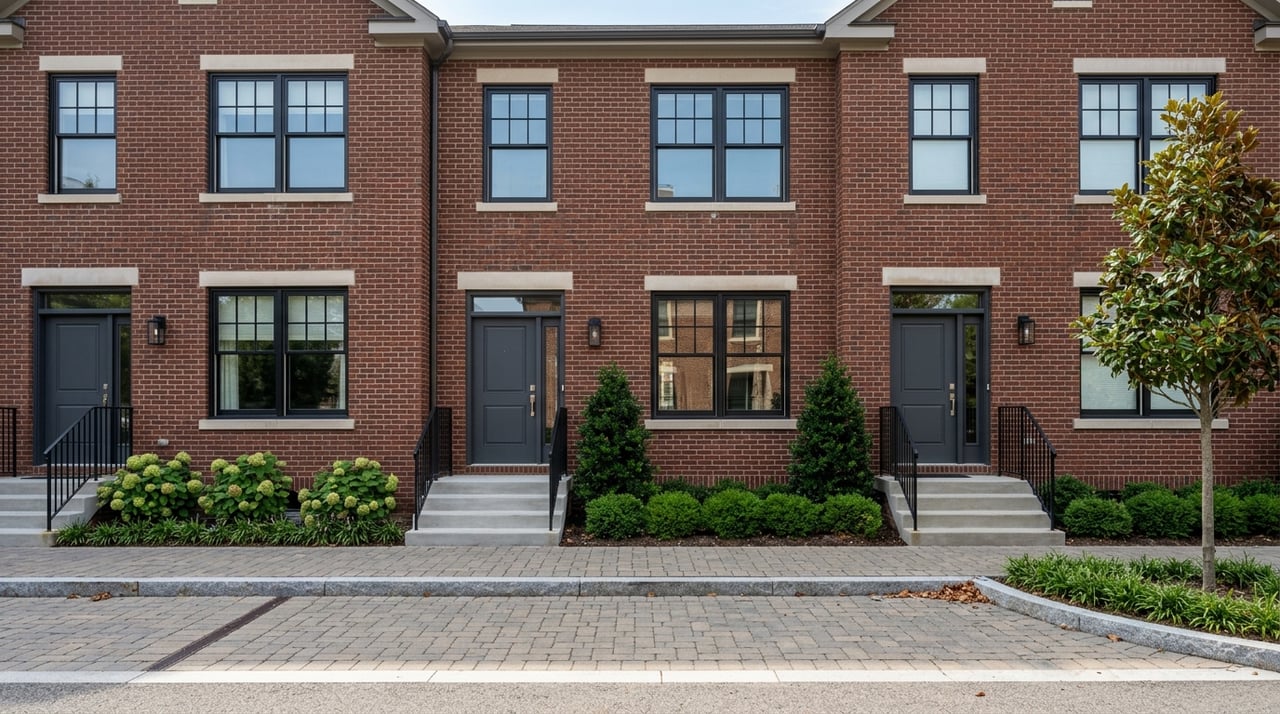
If you want a home in Sandy Springs without taking on the full price and upkeep of a detached house, condos and townhomes deserve a close look. In a city where owner-occupied home values are high, attached homes can offer a more manageable path to ownership while keeping you near major corridors, jobs, and daily conveniences. The key is knowing how these properties differ in monthly cost, financing, governance, and long-term fit. Let’s dive in.
Why attached homes matter in Sandy Springs
Sandy Springs is a high-cost housing market by many measures. Census data shows a median owner-occupied home value of $619,800, median monthly owner costs with a mortgage of $2,814, median gross rent of $1,870, and median household income of $104,340. For many buyers, that makes condos and townhomes an important option when a detached home feels out of reach or simply does not match the lifestyle you want.
The city’s planning framework also helps explain where attached homes tend to show up. Sandy Springs encourages walkable, mixed-use development and diverse housing options along major corridors and within specific nodes, rather than spreading the same housing types evenly across the city. In simple terms, you are more likely to find condos and townhomes in corridor and mixed-use settings tied to shopping, transit access, and employment centers.
That local role is backed up by the city’s housing-needs assessment. Between 2011 and 2018, Sandy Springs added 7,722 housing units, including 1,127 single-family attached townhome units. The same report found that homes selling below $400,000 were much more likely to be condos or townhomes, which shows how important attached housing is to the local ownership ladder.
What buyers usually find here
Sandy Springs has a wide mix of attached-home options. Some communities offer newer townhomes with garages and updated layouts, while others include older condo communities or townhome developments that were converted from apartments to condo ownership. That variety can create opportunity, but it also means you need to look closely at the ownership structure and the condition of the community.
Amenities are often a major draw. In different Sandy Springs communities, buyers may find features like gated entry, pools, clubhouses, fitness centers, tennis courts, dog parks, storage, and access to shopping, restaurants, parks, or MARTA service. These shared features can add convenience and lifestyle value, especially if you want lower exterior maintenance.
At the same time, amenities are not free. The more a community maintains, manages, and insures, the more likely it is that monthly dues will reflect that. Older communities may also come with a different maintenance profile than newer construction, so it is smart to weigh both the perks and the long-term cost of keeping them up.
Condos vs townhomes in Sandy Springs
Not every attached home works the same way. Some townhomes are on individual lots, while others are legally condominiums even though they look like townhomes. That difference matters because ownership structure can affect insurance, financing, association rules, and what parts of the property you are personally responsible for.
Sandy Springs zoning helps frame this. The city’s Residential Townhouse district is intended for neighborhood-scale attached homes on individual lots, while Residential Mixed Use districts can allow multi-unit attached residences, townhouses, and neighborhood-serving commercial uses. For you as a buyer, that means it is worth understanding both the home itself and the zoning context around it.
A townhome with condo ownership can feel very similar to a fee-simple townhome day to day, but the legal details may be very different. Before you fall in love with the floor plan, make sure you understand what you own, what the association maintains, and what rules govern the property.
Focus on the all-in monthly cost
One of the biggest mistakes buyers make is focusing too much on the list price. With condos and townhomes, the real question is your all-in monthly carrying cost. That means looking beyond principal and interest to include property taxes, insurance, mortgage insurance if applicable, HOA dues, utilities, and routine maintenance.
HOA dues are usually paid separately from the mortgage, and they can range from a few hundred dollars a month to more than $1,000 a month. In some communities, dues may cover exterior maintenance, amenities, trash, or common-area insurance. In others, the coverage may be more limited, which can leave you with higher out-of-pocket costs in other areas.
When I help buyers think through attached homes, the goal is not just finding a payment you can qualify for. It is finding a monthly cost that still feels comfortable after you account for how the community actually operates. A lower price with high dues is not always the better deal.
Insurance works differently here
Insurance is another area where attached homes differ from detached properties. In a multi-unit setting, the association’s master insurance policy usually covers common areas and certain shared parts of the property. You still need your own policy for your unit, your belongings, and any portions that fall under your responsibility.
That is why it is important to ask exactly what the association’s master coverage includes. Do not assume your personal policy needs will be the same from one community to another. Understanding that split early can help you budget more accurately and avoid surprises after closing.
You should also plan for the possibility of special assessments. Even if the regular dues seem manageable, a one-time assessment for repairs or major projects can change your short-term budget quickly. That is one more reason the financial health of the association matters.
Financing can depend on the project
With detached homes, financing is usually centered on the property and your qualifications as a borrower. With condos, the project itself may matter almost as much as the unit. That is because some loan programs look at the community’s insurance, financial condition, legal issues, title matters, and physical condition before approving financing.
For FHA condominium financing, project approval or single-unit approval may be required. HUD notes that eligibility can depend on issues like insurance coverage, financial condition, title, pending legal action, and physical condition. In practical terms, this means two similar-looking condo units may not be equally easy to finance.
Fannie Mae also identifies some condo projects as ineligible in certain cases, including projects that operate like hotels or resorts, projects with very high investor or second-home occupancy, continuing-care communities, or communities with mandatory third-party memberships. If you are considering a condo in Sandy Springs, it is wise to ask financing questions early rather than late in the process.
Review the condo documents carefully
In Georgia, condo buyers have meaningful document review rights, and that is a major protection. State law requires sellers in a residential condominium sale to provide documents such as the floor plan, declaration and amendments, articles of incorporation and bylaws, any ground lease, management contracts longer than one year, and the estimated or actual budget. The contract is voidable by the buyer until at least seven days after those required items are delivered.
That review period matters because the documents tell you how the community really functions. They can reveal maintenance responsibilities, use restrictions, leasing limits, pet rules, financial obligations, and how decisions are made. A beautiful kitchen does not tell you whether the association is planning expensive repairs or whether the rules fit your lifestyle.
If you are buying a condo or condo-ownership townhome, treat the declaration and budget as must-read items. They are just as important as the inspection and appraisal. This is where informed buyers protect both their money and their peace of mind.
Watch the association’s financial picture
Georgia law also requires condominium associations to hold meetings at least annually, provide advance notice, and report on the association’s affairs, finances, and budget projections. Similar annual meeting and notice rules apply to property owners’ associations. For buyers, that creates a helpful paper trail of how the community is being managed.
This is often where reserve levels, planned repairs, budget pressure, and rule changes become visible. If a community has aging roofs, deferred maintenance, or rising costs, those issues may show up in meeting materials or financial reports before they hit your wallet. Looking at the association’s financial picture is one of the best ways to judge whether a community feels stable and well-run.
You do not need to become an expert in HOA accounting overnight. You just need to know enough to ask the right questions and spot red flags early. Clear guidance here can save you from buying into avoidable stress.
Think about long-term fit
A condo or townhome can be a smart match if you value location, amenities, and lower exterior upkeep. In Sandy Springs, that often means easier access to major roads, mixed-use areas, and day-to-day conveniences without stepping into the detached-home price tier. For many first-time buyers, downsizers, and busy professionals, that tradeoff can make a lot of sense.
Still, attached living is not only about square footage and finishes. It also means shared decision-making, association rules, and a different level of control over the exterior and common spaces. If you know you want a large yard, more privacy, or fewer restrictions, a condo or townhome may feel limiting over time.
The right choice comes down to how you want to live. When your budget, ownership style, and expectations line up with the community, attached homes in Sandy Springs can be a strong and practical option.
If you are comparing condos and townhomes in Sandy Springs, having a clear strategy can make the process feel much simpler. From monthly cost questions to document review and community fit, the details matter. If you want steady guidance and responsive support as you weigh your options, connect with Keisha Williams.
FAQs
What makes condos and townhomes popular in Sandy Springs?
- Sandy Springs has relatively high owner-occupied home values, and the city’s housing data shows attached homes often play an important role for buyers looking for ownership below the detached-home price tier.
What monthly costs should buyers expect with a Sandy Springs condo or townhome?
- In addition to your mortgage payment, you should budget for property taxes, insurance, mortgage insurance if applicable, HOA dues, utilities, maintenance, and possibly special assessments.
What should buyers know about Sandy Springs HOA dues?
- HOA dues are usually separate from the mortgage and can range from a few hundred dollars a month to more than $1,000, depending on the community and what the dues cover.
What is different about financing a Sandy Springs condo?
- Condo financing can depend on both your qualifications and the project itself, including factors like insurance coverage, financial condition, legal issues, and occupancy mix.
What documents should buyers review for a Georgia condo purchase?
- Georgia law requires key condominium documents to be provided, including items like the declaration, bylaws, budget, floor plan, and certain management contracts, and buyers have a review window after delivery.
How can buyers tell if a Sandy Springs condo community is a good long-term fit?
- Look at more than the unit itself by reviewing the ownership structure, rules, budget, reserve planning, amenities, maintenance responsibilities, and the surrounding zoning context.