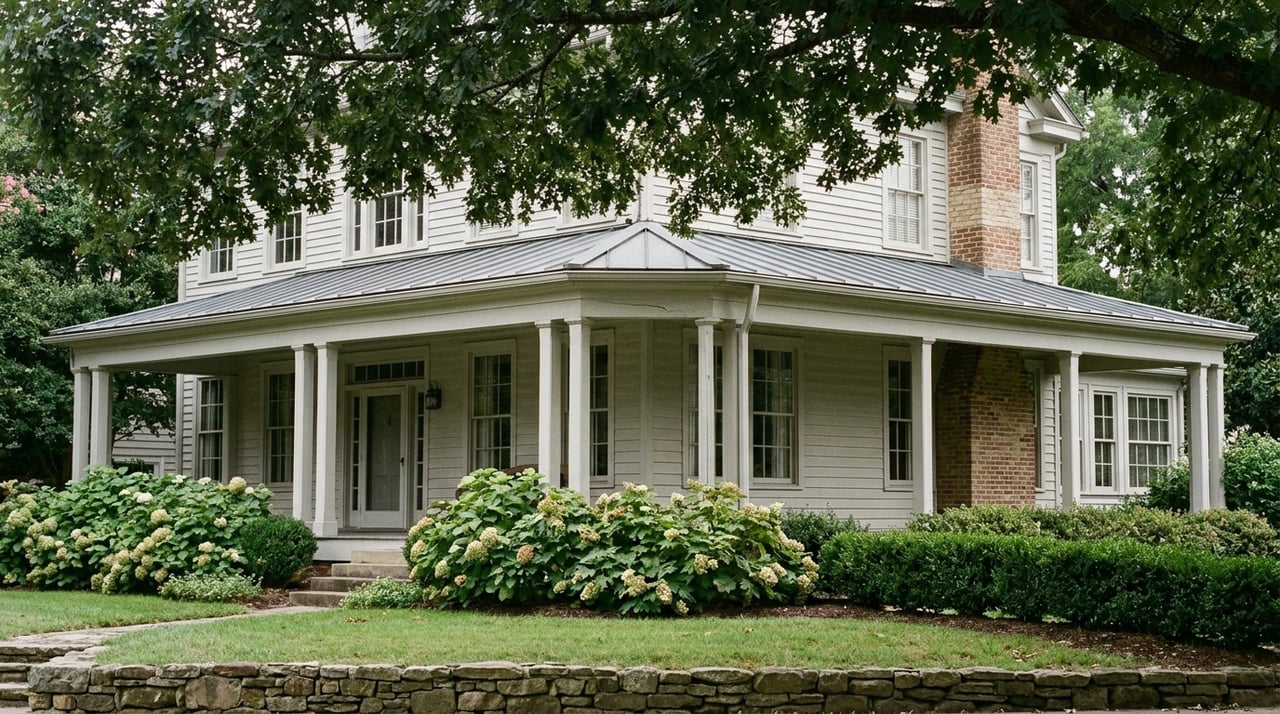
Picture two houses two blocks apart, both built before 1900, both with the wraparound porches and heart pine floors that make Marietta's older streets photograph so well. One sits on Kennesaw Avenue. The other sits on Whitlock Avenue. If both owners wanted to swap out a porch railing next spring, one of them needs city approval before a contractor touches a single baluster. The other doesn't.
Real estate marketing treats "historic Marietta" as a single, sellable idea: mature trees, pre-war construction, walking distance to the Square. The city's own paperwork draws a much narrower line, and that line, not the age of the house, decides whether a seller's past renovations are a two-minute conversation with a buyer's agent or a several-week problem that surfaces during due diligence. Most guides to buying or selling near the Square skip this distinction entirely. It's worth understanding before you list, because it determines what your own renovation history is actually going to cost you at the closing table.
Historic inventory near downtown moves fast when it's positioned correctly. As of late July 2026, homes across Marietta were going to pending status in around 30 days on average, and Cobb County as a whole has recently posted a typical time on market of about two weeks. A fast market rewards sellers who have their paperwork sorted before a buyer's attorney starts asking questions, and penalizes the ones who don't.
Two Kinds of "Historic," One City
Marietta layers three separate designations onto its older neighborhoods, and only one of them regulates what a homeowner can do to their own exterior.
The city carries five National Register historic districts: Northwest Marietta, Church Street-Cherokee Street, Washington Avenue, Whitlock Avenue, and Atlanta-Frasier Street, along with the separately listed Power-Hyde Farm Historic District. National Register status is federal recognition. It opens the door to rehabilitation tax incentives for income-producing property, but it doesn't require a homeowner living in the house to ask the city's permission before repainting a door or replacing a window.
Only three residential areas also carry Marietta's local historic designation, and that's the one with teeth. Kennesaw Avenue was the first, created on August 14, 2013. Church-Cherokee Streets followed, with design guidelines adopted March 9, 2016. Forest Hills rounds out the list. Inside those three districts, any exterior work visible from a public street, additions, demolitions, new construction, and many repair projects, requires a Certificate of Appropriateness from the city before work starts.
Here's the part that trips up even longtime owners: Kennesaw Avenue sits inside the boundaries of the much larger Northwest Marietta National Register district, which stretches from downtown out toward Noses Creek. Only the specific stretch the city separately designated in 2013 carries the local Certificate of Appropriateness requirement. Two houses can share the same National Register listing on paper and answer to completely different rules once you check which side of the local overlay boundary they fall on. The city's own historic districts page and zoning map are the only reliable way to know which category your address falls into. Guessing based on how old the house looks isn't good enough.
What a Certificate of Appropriateness Actually Requires
Inside Kennesaw Avenue, Church-Cherokee Streets, or Forest Hills, a homeowner applies to the city's Historic Preservation Commission before starting the kind of exterior project the ordinance covers. If the commission approves the application, it gets processed the same way a building or demolition permit would. If the commission disapproves it, or simply takes no action, no certificate issues, and the project can't move forward as proposed.
There's also a clock most homeowners never hear about until it matters. Once a certificate is finally approved, the owner has 12 months to pull the actual building permit and begin substantial, ongoing construction. Miss that window and the certificate expires and becomes void, meaning the whole review process starts over.
The enforcement here isn't theoretical. On March 11, 2026, the Marietta City Council took up a case where an applicant sought to revise a certificate of appropriateness that had already been approved the year before, case CoA2025-04, filed by general contractor Pedro Rodriguez and the property's owner. The Historic Preservation Commission denied the revision. The property owner appealed to city council, as the ordinance allows within ten days of a commission decision. Council upheld the denial. The takeaway for anyone selling in one of these three districts: having an approved certificate on file for a past project doesn't mean every later change to that project is automatically covered. A revision is its own review, and it can be denied even after the original work was blessed.
Where This Becomes a Closing Problem
Georgia is a buyer-beware state. There's no state law requiring a seller to fill out a formal disclosure statement, and the due diligence period written into most Georgia purchase contracts commonly runs somewhere between 7 and 10 days. Inside that short window, buyers and their agents routinely pull permit history directly from city and county records, because unpermitted work discovered after closing can affect a buyer's insurance coverage, their ability to pull future permits, and eventual resale value.
In Marietta's three locally designated districts, that permit check carries an extra layer most out-of-area buyers don't expect and most local sellers don't think to check for themselves. The city's record isn't just "was a building permit pulled." It's "was a Certificate of Appropriateness approved before that permit was ever issued." A deck, a fence, a window swap, or a rear addition completed by a previous owner without going through that review isn't a simple paperwork gap. It's a violation of the historic overlay itself, and resolving it typically means a retroactive design review through the Historic Preservation Commission, not just a late fee at the building department.
Homes on National Register-only streets, Whitlock Avenue, Washington Avenue, Atlanta-Frasier Street, or the stretches of Northwest Marietta outside the designated slice of Kennesaw Avenue, don't carry that added layer. A missing permit there is a more ordinary conversation with the city's building inspections office. For a seller, that split means two very different renovation histories to stand behind, and the difference depends entirely on a boundary line, not on how the house looks from the street.
Owner-occupied single-family homes are also generally not eligible for the state and federal rehabilitation tax credits that apply to certified rehabs of income-producing property, so a retroactive review inside a local district is almost always a compliance step to clear before closing, not an opportunity to recoup renovation costs.
The Tax Notice That Arrives at the Worst Time
There's a second calendar collision worth planning around. The 2026 Cobb County tax digest closed with just over five percent growth countywide, ahead of the roughly four percent increase the county had initially projected. Notices of assessment for 2026 went out to property owners in late May and early June, and the county's own guidance puts the 45-day appeal window closing by mid-July for most homeowners.
If you timed exterior work, a new roof, a repainted porch, refreshed landscaping visible from the sidewalk, to coincide with a summer or fall listing, that same visible improvement is exactly what shows up in the county assessor's model the following cycle. A seller who spent spring coordinating contractors and Certificate of Appropriateness paperwork rather than watching the mailbox can miss the appeal window entirely, and then carry a higher assessed value forward regardless of what the home ultimately sells for.
A Short Paper-Trail Check Before You List
Confirm which historic layer actually applies to your address. Use the city's zoning and historic district maps rather than assuming based on how the street looks. A National Register listing and a local designation are not the same thing, and only the local one requires a Certificate of Appropriateness.
Pull your own Certificate of Appropriateness and permit history if you're inside Kennesaw Avenue, Church-Cherokee Streets, or Forest Hills. If a previous owner did the work, request copies of both documents and keep them in your seller's file, even though Georgia doesn't require a formal disclosure form.
Start any retroactive review before you're under contract, not after. A design review through the Historic Preservation Commission can easily run longer than a standard 7 to 10 day due diligence period, and buyers rarely agree to extend that window once they've already found a permit gap.
Watch your mailbox in late spring, not just your listing calendar. If your county assessment notice lands while you're mid-renovation for a fall listing, the 45-day appeal window is running whether you've opened the envelope or not.
FAQ
Does a National Register listing limit what I can do to my home? On its own, generally no. Federal listing is largely a form of recognition tied to potential rehabilitation incentives for income-producing property. It doesn't trigger the same design-review requirement that Marietta's three locally designated districts carry.
What if I find out work on my home was never approved through a Certificate of Appropriateness? Inside Kennesaw Avenue, Church-Cherokee Streets, or Forest Hills, the fix usually means submitting a retroactive application to the Historic Preservation Commission before you list, since a buyer's due diligence period is rarely long enough to absorb that review once a contract is signed.
Do I have to disclose that my home sits in a locally designated historic district? Georgia doesn't require a standardized seller disclosure form, but the designation is public record tied to the address, and buyers doing their own due diligence typically find it. Being upfront about it early avoids a renegotiation later.
Selling an older home near the Square involves more than staging and a good listing photo. It means knowing exactly which rules apply to your address before a buyer's attorney finds out first. If you're weighing a sale in Marietta's historic core, or trying to figure out which side of these boundary lines your home falls on, Keisha Nathali can walk through your property's specific history and help you get ahead of it. Let's Connect.