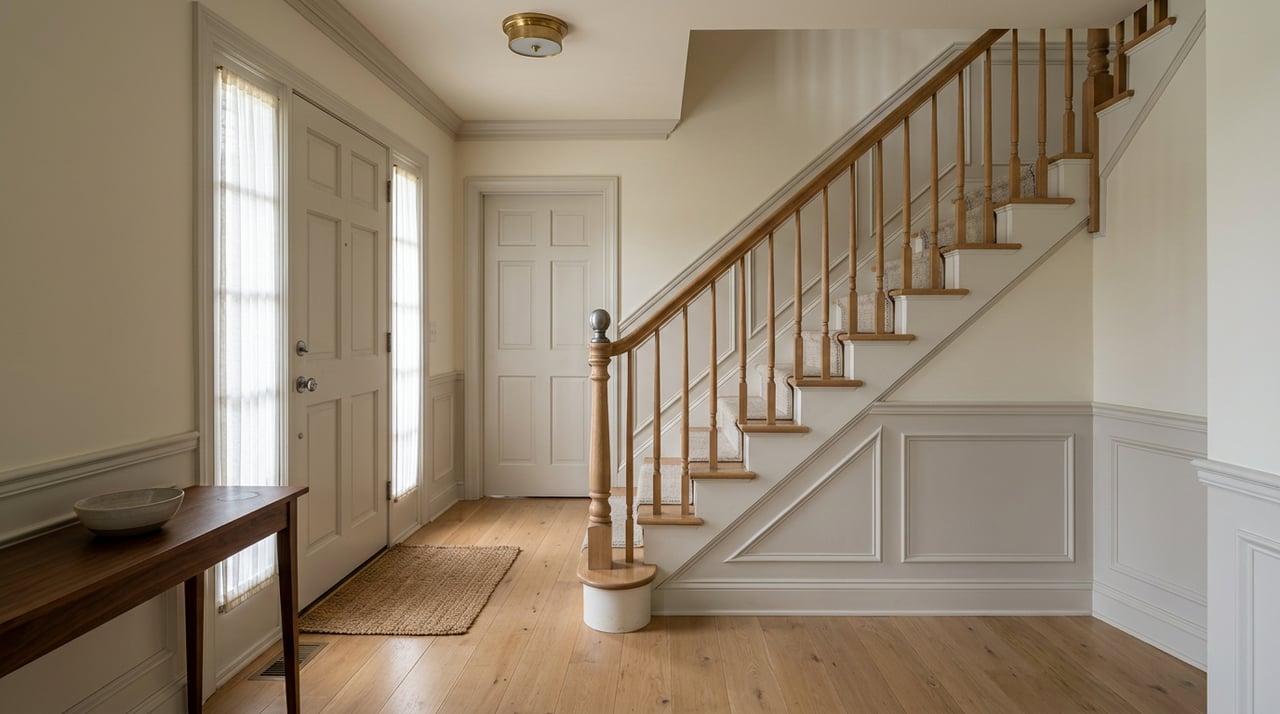
A buyer with a $480,000 pre-approval letter spent a Saturday touring three homes in Marietta last spring. The first sat two blocks off Glover Park, a renovated bungalow with heart pine floors and a wraparound porch. The second was a five-year-old traditional in a subdivision off Whitlock Avenue, close enough to walk to a grocery store but nowhere near downtown. The third was a newer build near Kennesaw, twice the square footage, on a lot big enough for a trampoline and a garden.
All three were priced within $15,000 of each other. None of them were competing for the same buyer, and none of them told the same story about what Marietta costs.
That's the part the citywide median hides. Marietta's median sold price sat at $480,000 over the six months ending in mid-2026, a number that shows up on every portal search and gets repeated in every market report. But that figure is an average of markets that pull in opposite directions, and a buyer who treats it as a single price point is going to misjudge every home they walk through.
The Number Everyone Quotes, and What It's Actually Averaging
Marietta is not one housing market wearing one price tag. It's at least three, stacked on top of each other and reported together because they share a zip code prefix and a school system name.
The largest slice of active inventory in Cobb County's Marietta submarket sits in the $300,000 to $499,000 range, based on active listing data reported for February 2026. That's the volume market: subdivisions, ranches, split-levels built mostly between the 1960s and 1980s, the bulk of what actually trades hands in a given month. A second, smaller band runs $500,000 to $699,000, and a real but limited slice sits at $700,000 and above.
Layer the geography on top of the price bands and the picture sharpens. As of February 2026, East Cobb's median often runs well above $600,000 for its larger, newer-finish properties, while areas described as West Marietta post medians closer to $400,000 for larger lots with less renovation. The citywide $480,000 median is the number you get when you blend a $650,000 East Cobb sale with a $395,000 West Marietta sale and call it representative of both.
It isn't. It's the mathematical middle of two conversations that have nothing to do with each other.
What $480,000 Actually Buys, Block by Block
| Lane | Typical range | What's driving the price | What you're actually buying |
|---|---|---|---|
| Historic Square / Glover Park corridor | $450,000 to $1.2 million+ | Scarcity, designated historic status, full renovation cost | A walk to Glover Park, original architecture, a home that rarely comes up for sale |
| The broad middle (city core, away from downtown) | $300,000 to $499,000 | Volume of comparable inventory, 1960s to 1980s construction | The bulk of what actually closes each month, traditional and ranch floor plans |
| West Marietta / edges toward Kennesaw and West Cobb | Roughly $400,000 to $800,000 depending on age | Larger lots, newer construction in developing pockets | More square footage and yard for the price, a longer drive to the Square |
The table looks tidy. The market underneath it isn't, because the first row breaks the assumption most buyers walk in with.
The Backwards Assumption Almost Every Buyer Makes
Ask most people what a walkable, historic downtown does to home prices in a mid-sized Southern city, and they'll guess it makes things more affordable: older stock, smaller lots, no new-construction premium. In Marietta, it's the opposite.
Homes inside the historic districts radiating from Glover Park, the Kennesaw Avenue, Whitlock Avenue, Church-Cherokee Streets, and Washington Avenue districts among them, typically start around $450,000 and climb past $1.2 million for fully renovated properties on larger lots, according to a 2026 cost of living breakdown for the city. A recent snapshot of homes tagged specifically as being in a Marietta historic district showed only four active listings at a median list price of $493,000, meaning the entire in-town historic inventory at any given moment can be counted on one hand.
That scarcity is the mechanism. These homes don't turn over often, and when they do, most have already been brought up to modern systems and finishes, which adds renovation cost on top of the location premium. The walkable, old-house dream that feels like it should be the affordable option is instead the smallest, priciest lane in the entire city. Buyers chasing "historic and affordable" in Marietta are chasing two things that don't currently coexist in the same listing.
The Corridor Nobody's Pricing In Yet
While the Square gets the postcard attention, a different kind of signal has been building two miles south, along Franklin Gateway.
In March 2026, Marietta's city council approved the sale of roughly 33 acres on Franklin Gateway to AMB Sports and Entertainment, the Arthur Blank organization that already owns Atlanta United and the Atlanta Falcons, for the headquarters and training facility of NWSL Atlanta, the city's incoming women's professional soccer franchise set to begin play in 2028. The deal is valued at $21 million to the city and includes a 38,000-square-foot facility with four full fields, part of an AMBSE investment along the corridor that will approach $200 million once combined with the company's existing Atlanta United training ground next door.
The land itself came from a $64 million pool the city set aside for Franklin Gateway redevelopment, funded by a bond Marietta voters approved back in 2013. That bond has been buying and repositioning parcels along the corridor for over a decade, and the soccer facility is the largest single project it has landed. As part of the deal, the city is also picking up a 10-acre parcel to convert into public park space.
None of that changes what a house on Franklin Gateway is worth today. It does mean the corridor now has a decade of public investment and a nine-figure private commitment pointed at it, the kind of infrastructure signal that tends to show up in property values years before it shows up in a median-price headline. Buyers looking at homes anywhere near that corridor are buying into a trajectory, not just a current comp.
Why Every Portal Tells You a Different Number for the Same Market
Pull up Marietta on three different sites and you'll get three different answers to a question that sounds simple: how fast is this market moving? As of a mid-2026 snapshot, one major portal has shown homes going to pending in around 11 days. Another, looking at the three-month window ending in May 2026, reported an average of 48 days to sell. A third, tracking live listing data as of July 2026, put the median age of currently active listings at just 3 days.
These aren't contradictions. They're three different measurements wearing the same label. "Days to pending" counts only the front half of a sale. "Days on market" averaged across every listing that eventually sells includes homes that sat for months before finding a buyer, which drags the number up. And "median age of active inventory" is a snapshot of what's sitting unsold right now, which tends to run low in a market where correctly priced homes get scooped up fast and only the overpriced stragglers linger.
The most useful version of this same data, tracked at the Marietta market level as of February 2026, showed median days on market rising from 19 to 22 and average days on market rising from 39 to 43 compared to the year before, even as sellers still captured roughly 98.8 percent of asking price on average. Read together, that's a market where well-priced homes still move quickly and the slower average is being pulled up by listings that launched too high. A buyer who sees "48 days on market" and assumes every house in Marietta is sitting for seven weeks is misreading a number that's really describing two different behaviors at once.
Reading the Map Before You Write the Offer
The practical version of all this is simple. Before comparing a listing to "the Marietta median," ask which of the three lanes it actually sits in, and whether the days-on-market figure attached to it reflects a fairly priced home or one that's already been passed over once or twice. A $480,000 listing two blocks from Glover Park and a $480,000 listing off a West Marietta subdivision road are not competing offers on the same product. They're different products that happen to share a number.
FAQ
Is a home near Marietta Square a good long-term value, given the premium? Scarcity works in an owner's favor over time. Because historic district inventory rarely turns over, and because renovated homes in that scarce pool have consistently commanded $450,000 and up, buyers who can absorb the entry premium are typically buying into a supply-constrained segment rather than an inflated one.
Where in Marietta is the best entry point for a growing family on a tighter budget? Based on current data, West Marietta and the edges toward Kennesaw offer the most square footage and lot size per dollar, with medians closer to $400,000 as of early 2026, though that means trading downtown walkability for space and a longer drive to the Square.
Should I wait until the Franklin Gateway soccer facility is finished before buying nearby? The facility isn't expected to open until closer to the club's 2028 debut, and current home prices along the corridor don't yet reflect the full scope of the investment. Buyers comfortable with a longer hold horizon may find more room to negotiate now than once construction visibly progresses.
If you're trying to figure out which of Marietta's markets actually fits your budget and your list, that's exactly the kind of conversation worth having before you write an offer, not after. Keisha Nathali has spent years reading these submarkets block by block, and she's glad to walk through what your specific number actually buys. Let's Connect.